

AI IS NOT OUR COMPETITOR, IT IS PEOPLE WHO USE AI BETTER THEN ME !
AI is not here to replace thoughtful people. It is here to help people who are willing to learn, adapt, and work smarter.

AI is not here to replace every thoughtful person. It is here to help people who are ready to learn, adapt, and work in a smarter way.
Today, AI can do many things very fast. It can write, explain, create ideas, help with code, make designs, summarize information, and much more. Because of this, many people are worried about their future. But instead of only being afraid of AI, we should understand how to use it properly.
The real advantage may not belong to AI itself. The advantage may belong to the people who know how to use AI better.
Why Are People Afraid of AI?
People feel worried when they see AI doing writing, coding, designing, video making, research, and many other types of work very quickly.
A task that may take a person one hour can sometimes be done with the help of AI in only a few minutes.
This can make people think:
If AI can do this so fast, what will happen to my job?
This fear is understandable. When we see a new technology doing something that humans used to do manually, it can feel uncomfortable. We may think that our skills are becoming less useful.
But before becoming afraid, we should first understand what AI is actually doing. AI is mainly helping people do work faster. It can give suggestions, create a starting point, find information, explain difficult topics, and reduce repetitive work.
AI looks powerful, so fear is natural. But we should first understand what AI is actually doing for us.
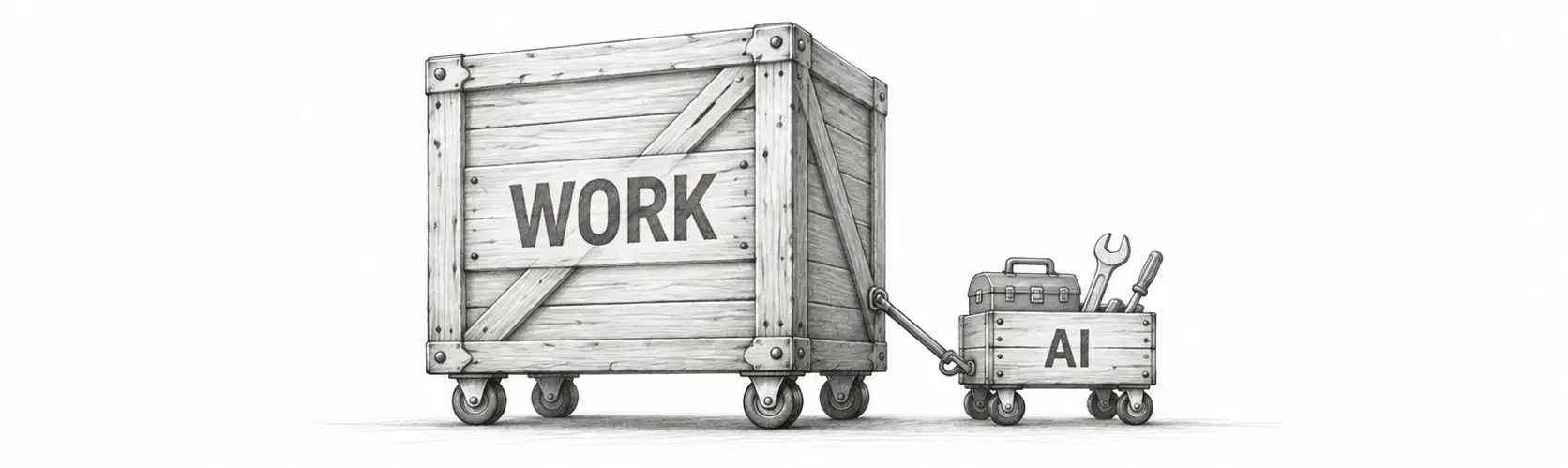
AI is not always replacing the person. In many cases, it is simply giving that person a better tool.
The Real Competition Is Not AI
Suppose two people have almost the same skill and experience. The first person works completely alone. They do the research manually, write everything from the beginning, check every small mistake themselves, and spend a lot of time finding information.
The second person also has the same basic skills, but they know how to use AI properly.
They use AI to find ideas, understand difficult topics, check mistakes, create a first draft, organize information, and save time.
Now both people may still be good at their work. But the second person may finish the same task faster.
Because they save time, they may also have more time to improve the final work, check the small details, talk with the client, or learn something new.
That is why the real competition is often not:
Human vs AI
It is:
Human vs another human who knows how to use AI better.

Think about a developer. One developer may spend two hours trying to understand an error alone. Another developer may use AI to understand the possible reason for the error, get a simple explanation, and then use their own knowledge to fix it.
The second developer is not successful because AI replaced their knowledge.
They are successful because they used a useful tool properly.
The same thing can happen with designers, writers, marketers, business owners, students, video editors, teachers, and many other people.
AI can increase our speed. But we still need our own skills to use that speed in the right direction.
AI Is Good at Helping, Not Living Your Life
AI can do many useful things. AI can:
give ideas
summarize information
explain something
check mistakes
help with writing
help with code
save time
It can also help us understand something that feels difficult. For example, if you are learning programming and you do not understand a piece of code, AI can explain it in easier words.
If you are writing an email, AI can help you improve the grammar. If you are reading a very long document, AI can help you understand the main points quickly.
If you are working on a new idea, AI can help you explore different possibilities. These things are useful. But there is also an important limit.
AI does not have your full life experience. It does not know every detail about your customer.
It does not understand your business in the same way you do unless you give it enough information.
It does not know every hidden problem in your project. It also cannot take full responsibility for your final decision.
AI may give an answer that looks correct but is actually wrong. It may misunderstand your situation.
It may also give information that needs to be checked. That is why the person using AI still needs to think.
The human still needs to think.
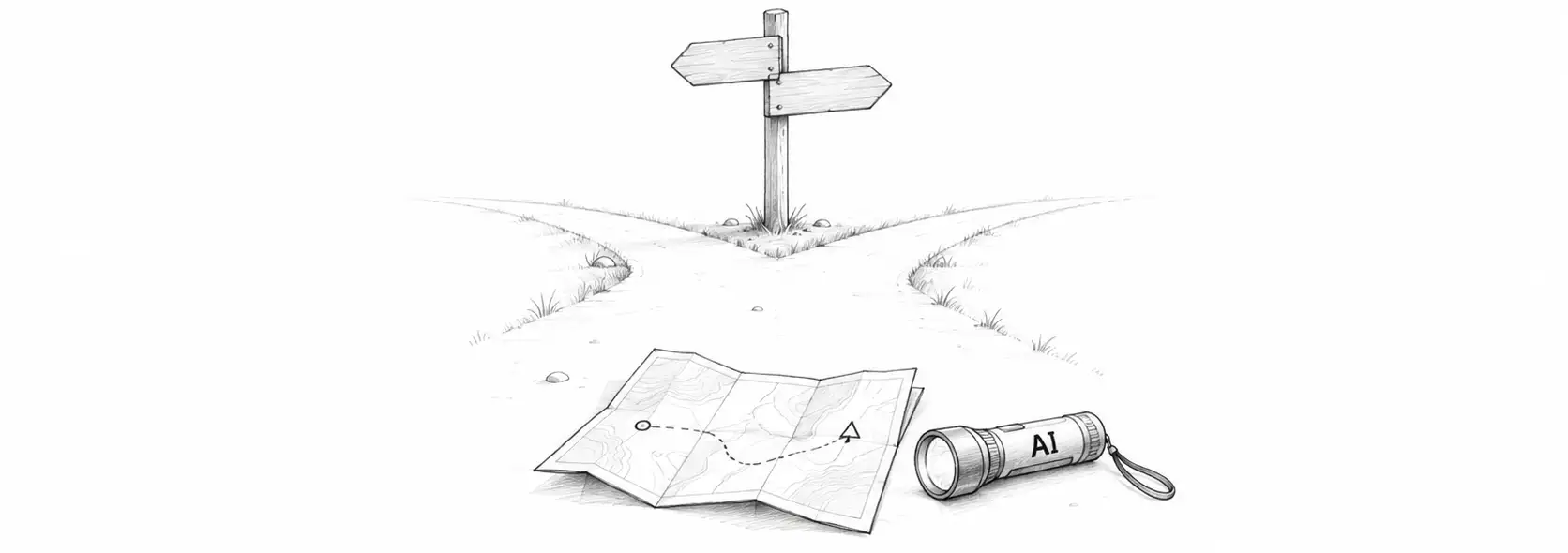
AI can support your thinking, but it should not completely replace it. The final responsibility is still yours.
Smart People Use AI as a Tool
Smart people do not give everything to AI.
They do not simply ask AI to do the full work and then copy the result without checking anything. They use AI where it is useful. For example:
starting a first draft
finding ideas
learning a difficult topic
checking grammar
understanding code
summarizing a long document
organizing information
Then they check the result themselves. They read it. They improve it. They remove wrong information. They add their own experience. They make the final decision. This is a much better way to use AI.
For example, a designer can use AI to explore some early ideas, but the designer still needs to understand the brand, the customer, the audience, the colors, and the purpose of the design.
A developer can use AI to create a basic code example, but the developer still needs to understand whether the code is secure, clean, efficient, and suitable for the project.
A writer can use AI to create a first draft, but the writer still needs to add their own voice, experience, emotion, and real understanding. A business owner can use AI to study customer feedback, but the business owner still needs to decide what is best for the business.
So AI should work with our skills, not replace our thinking. A calculator did not remove the need to understand mathematics.
Google did not remove the need to understand information. And AI does not remove the need to think.

It simply gives us another powerful tool.
Do Not Try to Fight AI. Learn to Work With It.
Technology has changed the way people work many times before. Computers changed office work. The internet changed communication and business. Smartphones changed how people work, learn, shop, and communicate. Design software changed the work of designers. Programming tools changed the way developers build software.
Every time a big technology appears, some people become afraid. But slowly, people learn how to use the new tools. The people who adapt often become faster and more productive.
AI can be treated in the same way. Instead of spending all our energy asking:
Will AI take my job?
A better question can be:
How can I use AI to become better at my job?
If you are a developer, learn how AI can help you understand code, debug problems, write documentation, and learn new technologies.
If you are a designer, learn how AI can help you create ideas, improve your process, and explore different directions faster.
If you are a student, use AI to understand topics, not only to copy answers. If you are a business owner, use AI to organize information, understand customers, improve support, and save time.
If you are a writer, use AI for research and first drafts, but keep your own voice. The goal should not be to become dependent on AI. The goal should be to use AI wisely. AI is changing the way we work. That does not mean people are becoming useless.
In many situations, people are becoming more capable because they now have better tools. One person can sometimes do work today that previously required much more time.
A small team can sometimes complete tasks that once required a much larger team. A beginner can understand difficult topics faster.
An experienced professional can reduce repetitive work and spend more time on important decisions.
This is where AI becomes useful. The goal is not to let AI think for us. The goal is to let AI help us where it can, while we keep the things that matter most: our judgment, experience, creativity, understanding, and responsibility.
AI can give you information. But you decide what to do with that information.
AI can give you ideas. But you decide which idea is good.
AI can give you a first draft. But you decide whether it is ready.
AI can help you move faster. But you still choose the direction.
So maybe the biggest risk is not that AI becomes better than us.
The bigger risk is that we refuse to learn while other people continue improving the way they work.
AI may not take your job. But someone who knows how to use AI well may work faster than someone who refuses to learn it.
We do not need to compete with AI. We need to learn how to work with it, understand its limits, improve our own skills, and use it as an assistant.
Because in the future, knowing your skill may still be important. But knowing how to combine your skill with AI may become even more important.
Conversation
0No comments yet. Start a thoughtful conversation.